When Were Laptops Invented? A History of Portable Computing
Portability is a modern luxury. We take it for granted today.
Most technicians work on thin, light machines that fit in a backpack easily. However, the early history of mobile computing looks very different from our current standards.
The journey was slow. It took decades to move from heavy luggables to true laptops.
The Early Precursors and Visions
Before hardware existed, ideas did. In 1968, Alan Kay proposed the Dynabook concept, which envisioned a personal computer for children that could be held in a lap; this single idea laid the groundwork for every mobile device we use today.
Hardware arrived later. The IBM 5100 debuted in 1975 as a heavy beast. It weighed roughly 24 kg and was far from portable, yet it set the stage for miniaturization efforts across the industry.
It wasn't quite a laptop. These machines were essentially desktop computers with handles attached to them.
The First Commercial Successes
True mobility changed in 1981. Adam Osborne released the Osborne 1, which is widely recognized as the first commercially successful portable computer. While it was iconic, it weighed about 11 kg and utilized a tiny five-inch screen that made coding quite difficult.
The design was awkward. You couldn't really use it on your lap without a desk for stability.
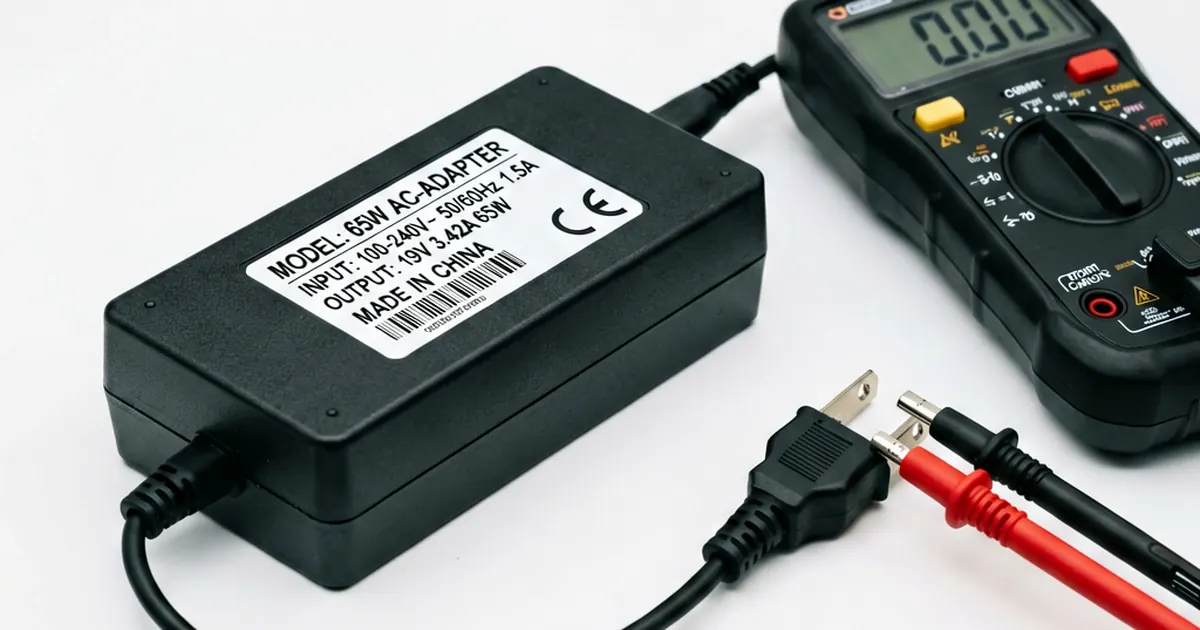
Other machines competed fiercely during this era. The Epson HX-20 appeared in 1981 as a notebook-sized contender, offering a different approach to small-scale computing. If you were maintaining older portable tech today, you might find that an 19V 1.58A AC Adapter Charger Toshiba R33030 N17908 V85 is much easier to source than parts for these vintage relics.
The Rise of the Clamshell Design
Design matters immensely. In 1982, the Grid Compass 1101 introduced the clamshell form factor we still use in every modern MacBook or Dell XPS. This machine was incredibly expensive at $8,150 and found its primary home with NASA scientists rather than casual office workers.
The shape stuck. It defined how humans interact with mobile screens for the next forty years.
Marketing caught up soon after. The Gavilan SC arrived in 1983 as the first machine explicitly marketed using the term 'laptop' by Gavilan Computer. They wanted to distinguish their product from the heavy, suitcase-style luggables that preceded them.
Establishing IBM and Toshiba Standards
The mid-eighties brought stability. IBM released the PC Convertible in 1986, which served as the company's first real attempt at a laptop format. These early units often suffered from power delivery issues that modern technicians would recognize instantly.
Repairing them is hard. If you are working on similar legacy architecture, finding an IBM Thinkpad T40 T41 T42 T43 R50 DC Power Jack is much more common than finding parts for 1986 models.
Toshiba changed the game in 1985 with the T1100. This was the first truly portable IBM-compatible machine that people could actually carry around a standard office. It proved that compatibility mattered as much as weight.
Modern Layouts and User Experience
Ergonomics eventually took center stage. In 1991, Apple released the PowerBook, which revolutionized how we use mobile hardware by introducing the palm rest and trackball layout. Before this, users often struggled with awkward keyboard positioning that led to wrist strain during long sessions.
The layout worked well. It became the blueprint for every laptop design from that point forward.
As machines grew thinner, components became more integrated. We moved away from bulky external bricks to internal power management systems. For example, if you are servicing a mid-range consumer unit, you might need an HP Pavilion DV3 Series DC Power Jack Cable to fix basic charging issues.
Reliability is key. Modern repair focuses heavily on these small, modular components that ensure the machine stays powered through various tasks.
The Legacy of Portability
We have come far. From 24 kg monsters to sub-1 kg ultrabooks, the engineering evolution is staggering. Every breakthrough in battery density and CPU efficiency has directly contributed to the shrinking footprint of our primary tools.
History repeats itself. We are seeing a shift toward even more integrated, non-repairable designs that challenge the DIY ethos established by early hobbyists.
Frequently Asked Questions
What was the first successful portable computer?
The Osborne 1, released in 1981 by Adam Osborne, is considered the first commercially successful portable computer.
When did the clamshell design start?
The Grid Compass 1101, released in 1982, was the first machine to use the clamshell design we use today.
Was the IBM 5100 a laptop?
While it was a precursor to portable computing, its 24 kg weight makes it more of a small desktop than a true laptop.